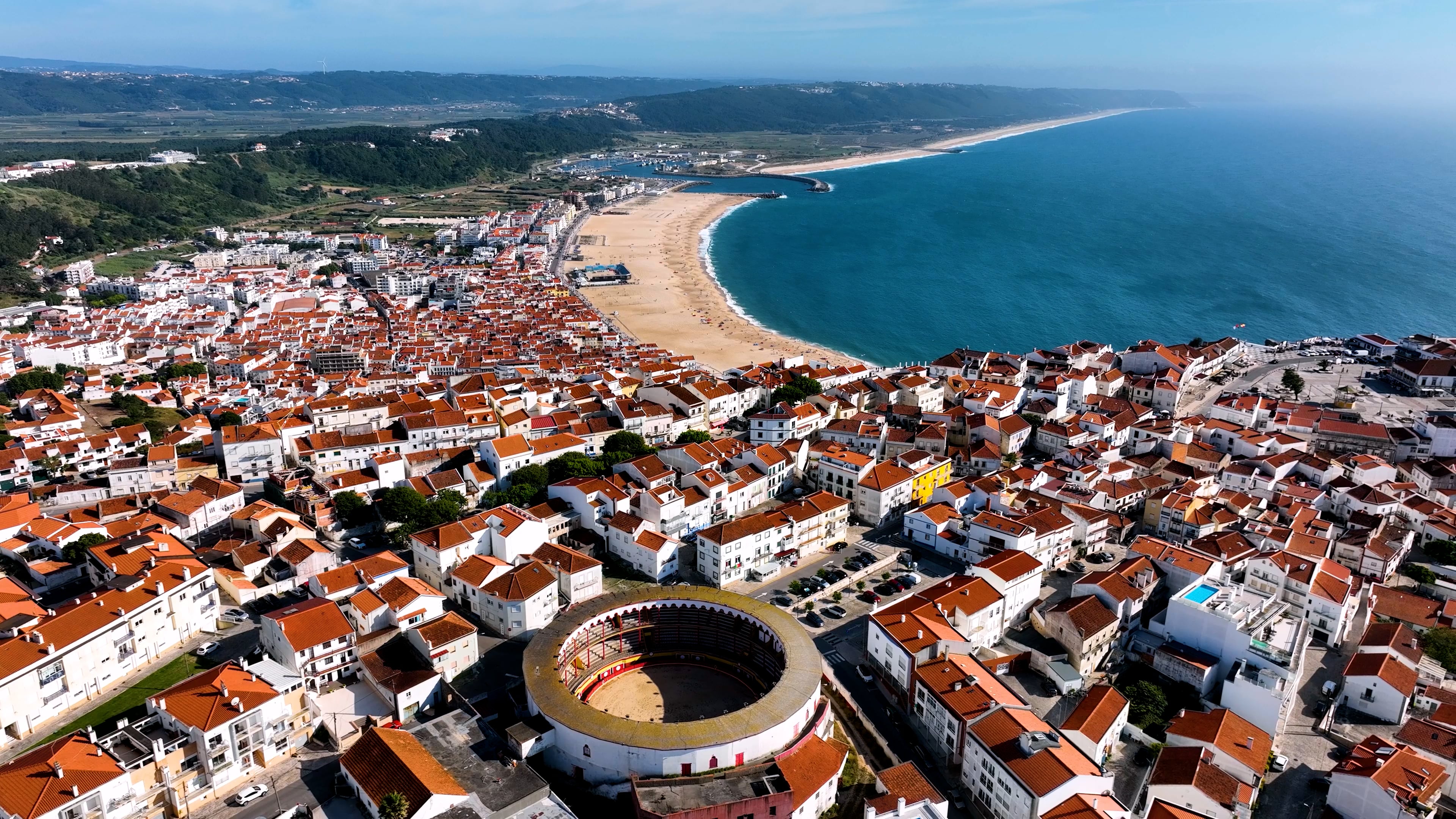
Moving to Portugal from the UK: Visas, tax and the relocation process
Michael Johnson
Contributor
Micheal Johnson writes for Portugal Pathways, turning the experiences of relocating families into practical guidance for readers considering the same move. He is especially interested in the human side of relocation — the decisions, trade-offs, and turning points that don't show up in official guidance.
Moving to Portugal from the UK involves choosing the appropriate immigration route and reviewing UK tax, pensions and inheritance arrangements.
New applicants using the D7, D8 residence or D2 route generally obtain a residence visa before completing the residence-permit process in Portugal. Golden Visa applicants follow a separate AIMA process, while people with protected Withdrawal Agreement rights should check their existing residence position. The UK side has decisions that are easier to settle before departure than to rearrange afterwards.
What moving to Portugal from the UK involves
Two processes run at the same time in a move from the UK to Portugal: a Portuguese immigration process that ends with a residence permit, and a UK exit that settles where you are taxed and how your pensions and estate are treated. Immigration residency and tax residency are separate legal questions, decided under different rules. Holding a Portuguese residence permit does not by itself make you a Portuguese tax resident.
The move at a glance
The typical D7, D8 residence and D2 relocation process runs in five stages, and each stage has a Portuguese task and a UK task. Golden Visa applicants follow a separate AIMA process, described under the Golden Visa route below:
Stage
Portugal side
UK side
1. Preparation
Choose a visa route and gather documents: income evidence, proof of accommodation, criminal record certificate, health insurance, and arrange a NIF where your route needs one before arrival
Review your UK residence position, pensions and inheritance tax exposure while every option is still open
2. Visa application
Apply for the residence visa from the UK through the Portuguese consular network
Review the proposed departure date, UK day counts, work and remaining ties against the statutory residence test and any split-year conditions
3. The move
Ship belongings, arrange pet travel and travel on the residence visa
Check whether HMRC notification is required for your circumstances
4. Arrival
Attend the AIMA (immigration authority) appointment, register an address and update any existing NIF (Portuguese tax number) and banking records
Check whether split-year treatment applies to the departure tax year
5. First months
Register your driving licence, register for healthcare and set up money transfers
Review how UK-source income is taxed under the UK–Portugal double taxation convention
Who this move suits, and when co-ordinated support matters
Moving to Portugal from the UK is not limited to wealthy applicants. The process applies to every UK national, but co-ordinated support matters most for households with UK pensions, investment income, property or inheritance tax exposure. In those households, the UK and Portuguese decisions affect each other. A pension decision changes the tax picture, and the departure date changes the residence test. A household moving on a single salary or a State Pension can often follow the stages below on its own.
Portugal Pathways' team includes professionals who have relocated from the UK and other regions, and the sequencing on this page reflects the order those decisions tend to arrive in. The reasons behind the current wave of British moves are covered in why so many Brits are moving to Portugal. Popular areas with British movers include Cascais and Lisbon, Porto and the Algarve's Golden Triangle, around Vale do Lobo and Vilamoura.
Do UK citizens need a visa to live in Portugal after Brexit?
UK citizens without protected Withdrawal Agreement rights need appropriate residence permission to live in Portugal after Brexit. Since 1 January 2021, they have been treated as third-country nationals, and the visa-free allowance covers short visits only. The position is set out in the UK government's Living in Portugal guidance. For the D7, D8 residence and D2 routes, living in Portugal means applying for a residence visa before you travel, then completing residence registration with AIMA, the Portuguese immigration authority, after arrival. Golden Visa applicants follow a separate AIMA process.
How the 90/180-day rule works for British visitors
The 90/180-day rule generally lets British visitors spend up to 90 days in any rolling 180-day period across the whole Schengen Area under current rules, not in Portugal alone. Every day spent in any Schengen country counts towards the same 90. The window moves daily, so the count always looks back over the previous 180 days. The rule caps visits, not residence: staying beyond the short-visit allowance requires an appropriate visa, residence permission or other applicable right. Time authorised in Portugal under a Portuguese residence permit or long-stay visa is excluded from the short-stay calculation.
The EU's Entry/Exit System (EES) records eligible short-stay travellers at the external borders of participating countries. Holders of a Portuguese long-stay visa or residence permit are exempt from EES registration and should carry the relevant document. The planned ETIAS travel authorisation is not yet in operation.
An increasing number of British nationals are making the move to Portugal
If you were resident before 1 January 2021
UK nationals covered by the Withdrawal Agreement who have maintained their rights keep their residence rights and do not need a new visa. Their position rests on residence before 1 January 2021 and continuing lawful residence, so keep the evidence and check it against the current conditions in the UK government's Living in Portugal guidance.
Choosing your route: D7, D8, D2 or Golden Visa
The right Portuguese visa route for a move from the UK is decided by the shape of your income and how much time you intend to spend in Portugal. Passive income points to the D7, remote employment to the D8, a Portuguese business to the D2 and residency without full relocation to the Golden Visa. The full route-by-route comparison is set out in the D7, D2, D8 and Golden Visa compared.
Route
Typical UK applicant
Financial basis (2026)
Presence requirement
D7 Visa
Retirees and people living on pensions, rental or investment income
Income of at least the Portuguese minimum wage (€920 a month) for the main applicant, plus 50% for a spouse and 30% per child
A temporary residence permit may be cancelled for absence without valid reasons for six consecutive or eight non-consecutive months over the permit's total validity, subject to applicable exceptions
D8 Visa
Remote employees and freelancers working for clients outside Portugal
Average monthly income over the previous three months of at least four times the minimum wage (€3,680 a month)
Residence-permit route: a temporary residence permit may be cancelled for absence without valid reasons for six consecutive or eight non-consecutive months over the permit's total validity, subject to applicable exceptions. Temporary-stay visa: conditions differ
D2 Visa
Founders and business owners starting or investing in a Portuguese business
A viable business plan and proof of financial means
Route-specific residence obligations and absence limits apply
Golden Visa
People who want Portuguese residency without moving full-time
A qualifying investment, most commonly at least €500,000 in a CMVM-regulated fund
Approximately seven days per year on average (detail below)
The D7, D8 and D2 applications also need private health insurance that meets Portuguese visa requirements in most cases, which is set out on the private health insurance page.
D7 Visa: Retiring or living on UK passive income
The D7 Visa is a residence visa for people with regular passive income, such as pensions, rental income or investment returns, who intend to live in Portugal long-term. The 2026 income basis is the Portuguese minimum wage, €920 a month, for the main applicant, plus 50% for a spouse and 30% for each child. The threshold moves each January with the minimum wage. Applicants also need proof of accommodation in Portugal, a clean criminal record and, in most cases, qualifying private health insurance.
A temporary residence permit may be cancelled if the holder is absent without valid reasons for six consecutive months or eight non-consecutive months during the permit's total validity, and route-specific exceptions apply. The D7 suits a real relocation, not a part-time base. The application process for UK applicants is covered on the D7 visa page.
D8 Visa: Working remotely from Portugal
The D8 Visa, Portugal's Digital Nomad Visa, has two forms: a temporary-stay visa for less than one year and a residence-visa route for remote workers employed or contracted by employers and clients outside Portugal. Applicants must evidence average monthly income over the previous three months of at least four times the Portuguese minimum wage: €3,680 on the €920 minimum-wage basis for 2026. They must also provide evidence of their tax residence and the employment or service relationship required for the application. Employees evidence income through contracts and payslips, and freelancers through client contracts and invoices. Applicants also need valid health insurance and a clean criminal record.
The residence-visa route is valid for four months and requires an AIMA residence-permit application. The temporary-stay visa and the residence-permit route have different conditions. Confirm the absence and renewal rules for the specific visa or permit; the six/eight-month temporary residence-permit rule should not be treated as the temporary-stay visa rule.
D2 and other routes
The D2 Visa covers founders and business owners: non-EU nationals starting or investing in a Portuguese business, on a viable plan that shows economic potential. Most applicants either incorporate a Portuguese company before applying or present a detailed plan with proof of funds, and company formation can take one to two days in simple cases. Authorities assess economic, social and cultural relevance, and technology start-ups, tourism ventures, professional services and traditional businesses are common examples. Renewal, appeal and resubmission options should be confirmed for the specific case with a licensed professional.
Golden Visa: Residency without full relocation
The Portuguese Golden Visa is a residency-by-investment programme that can provide Portuguese residency without full-time relocation, with an average presence of approximately seven days per year. Approval is subject to AIMA review and applicable law. For renewal, the statutory physical-presence requirement is seven days, consecutive or not, in the first year and 14 days, consecutive or not, in each subsequent two-year period. AIMA does not state how the general temporary-residence-permit absence rule applies to temporary Golden Visa permits. Holders should confirm the position with AIMA or a qualified immigration professional. Requirements are subject to legislative change and should be checked for the applicant's circumstances. Qualifying routes include:
a subscription of at least €500,000 in a CMVM-regulated investment fund (the most common route)
at least €500,000 in qualifying business creation or investment, with job-creation requirements
a donation of at least €250,000 to cultural or artistic production or national heritage (€200,000 in designated low-density areas)
other routes established under Portuguese legislation, such as scientific research
Buying property has not been a qualifying route since the end of 2023. The Golden Visa suits UK nationals who want residency optionality while keeping their main base elsewhere. Moving to Portugal full-time on a Golden Visa remains possible, but tax residency then follows the Portuguese rules below.
The step-by-step process: From your UK front door to registered resident
The typical D7, D8 residence and D2 move follows five stages, and each stage produces something the next one needs. Golden Visa applicants follow a separate AIMA process.
Prepare documents and settle UK-side questions.
Apply for the appropriate Portuguese visa.
Move household goods, pets and people to Portugal.
Complete arrival registration with AIMA and update tax and banking records.
Register healthcare and driving arrangements and set up money transfers.
Stage 1: Preparation in the UK
UK-side preparation gathers the documents the consulate will ask for and settles the UK decisions that are hardest to rearrange later. On the Portuguese side, prepare:
Income evidence matched to your route: pension statements, rental agreements, employment contracts or client invoices.
A criminal record certificate, apostilled for use in Portugal.
Proof of accommodation in Portugal, such as a rental contract or property deed.
Private health insurance that meets Portuguese visa requirements.
Arrange a NIF and any required banking before transactions or application evidence that depend on them; confirm the timing for your route.
On the UK side, four decisions are easier to make now than after the move: your expected departure date and its effect on the statutory residence test, what happens to each pension, your inheritance tax position and whether IFICI eligibility applies to your work. Each is covered under UK tax, pension and inheritance below.
Settling these four first stops the visa timetable from deciding your tax position by default.
Stage 2: The visa application from the UK
For the D7, D8 residence and D2 routes, the visa application from the UK is made through the Portuguese consular network before you travel, and each route attaches its own evidence to the same application: income proof and accommodation for the D7, remote-work contracts for the D8 and the business plan for the D2. Processing times vary by route and consulate; D2 processing typically takes two to four months. After arrival, AIMA completes the residence process. Publicly reported backlogs at AIMA mean the timing of that stage cannot be fixed in advance, and the current position is covered in AIMA's backlog and processing times.
There are various visa options available for Brits looking to relocate to Portugal
Stage 3: The move itself (shipping, pets and travel)
The move itself covers shipping household goods, arranging pet travel and travelling to Portugal on the residence visa. Shipping costs vary with volume, distance and whether goods travel by road or sea. For dogs, cats and ferrets travelling to Portugal with owners resident in Great Britain, current GOV.UK guidance requires an animal health certificate and the applicable microchip and rabies requirements. Northern Ireland residents can use an EU pet passport. Check the official guidance for your animal, residence and travel arrangements before booking. Portugal Pathways co-ordinates removals, pet care and related concierge services through its partner network.
Living costs after the move can be compared category by category. The figures below come from different sources and periods, so they show the scale of each cost and do not add up to a like-for-like household budget:
Cost
UK
Portugal
Rent
Average UK private rent of £1,406 a month in the 12 months to September 2026 (ONS)
£1,723 a year, about £144 a month, for a typical dual-fuel household under the 1 October to 31 December 2026 price cap (Ofgem)
Electricity, water and gas of roughly €100 to €180 a month, depending on usage and season, with no household size or date given (Portugal Pathways living-costs guide)
Portuguese rents are quoted per square metre, so a monthly figure depends on the size of the home. The Portuguese utilities range includes water, which the UK figure does not. Transport, healthcare and everyday spending are covered in living in Portugal: cost, healthcare and quality of life.
Stage 4: Arrival and registration in Portugal
Registration in Portugal completes the process the consulate started: an AIMA residence appointment and address registration, plus updating any existing tax or banking records. The NIF (Número de Identificação Fiscal) is the Portuguese tax identification number. It is needed for leases, utilities and the bank account, so arrange it before arrival where your route allows; confirm the current process for your circumstances. Costs across the process include visa and consular fees, AIMA or residence-card fees, legal and professional fees, translation and apostille costs, NIF and banking costs and relocation costs. Your immigration lawyer can confirm the current amounts.
Stage 5: The first months (driving, healthcare and money)
After arrival, complete the driving-licence and healthcare registrations that apply to you and arrange suitable banking or currency-transfer services, following each process's deadline. The licence is registered or exchanged with IMT (Instituto da Mobilidade e dos Transportes, the transport authority; detailed under Your UK Driving Licence in Portugal below), and healthcare runs through S1 registration where entitled and the SNS (the public health service). One date matters for IFICI: the normal registration deadline is 15 January of the year after Portuguese tax residency begins (see the IFICI section below).
What the move means for your UK tax, pension and inheritance position
Moving to Portugal changes your UK tax position in three ways: it can end UK tax residence, change how your pensions are taxed, and change the extent of UK inheritance-tax exposure. None of these follows automatically from the Portuguese visa, so each needs its own review. Cross-border tax co-ordination through licensed professionals is set out on the tax and financial planning page.
When you become a Portuguese tax resident
You become a Portuguese tax resident when Portuguese tax law classifies you as one, not when you receive a residence permit. In general, that means spending more than 183 days, consecutively or intermittently, in Portugal during any 12-month period beginning or ending in the relevant tax year, or having a home in Portugal in circumstances suggesting you intend to keep it as your habitual residence. A Golden Visa holder spending approximately seven days a year in Portugal would not normally meet that test on presence alone. A D7 or D8 holder living in Portugal full-time normally would. Portugal operates a progressive income-tax system, and tax treatment is set by the type of income and individual circumstances.
UK tax residence and continuing inheritance-tax exposure
The statutory residence test, set out in HMRC guidance, determines UK tax residence for each tax year from days spent in the UK and remaining ties such as family, accommodation and work. Becoming non-resident does not necessarily end UK tax obligations. In the year you leave, split-year treatment may divide the tax year into a UK-resident part and a non-resident part. This is why the departure date, settled before you leave, matters.
UK inheritance tax has been residence-based since 6 April 2025. A person who has been UK resident for at least 10 of the previous 20 tax years is a long-term UK resident, and their worldwide assets are within the scope of UK inheritance tax. After leaving, worldwide assets can remain within UK inheritance-tax scope for a time-limited tail period linked to the person's UK residence history, subject to the detailed rules, exceptions and transitional provisions. UK assets can remain within UK inheritance-tax scope even after worldwide exposure ends, subject to applicable exemptions and reliefs. The current rules are set out in HMRC's guidance for long-term UK residents, and the planning considerations for British families in Portugal are covered in UK inheritance tax.
Pensions: the state pension, private pensions and QROPS
The UK State Pension is generally uprated in Portugal for qualifying recipients. The legal basis depends on the person's circumstances, including the Withdrawal Agreement's social security provisions and later UK-EU social-security arrangements. How the State Pension and private pensions are taxed once you live in Portugal is determined by the UK–Portugal double taxation convention and your circumstances.
Transferring a UK pension overseas needs a separate assessment. No Portugal-domiciled scheme currently appears on HMRC's Recognised Overseas Pension Schemes list, which HMRC updates regularly. Since 30 October 2024, transfers to schemes elsewhere in the EEA are no longer automatically outside the 25% Overseas Transfer Charge. The rules are covered in QROPS Portugal: UK pension transfer rules.
IFICI and what replaced NHR
IFICI (Incentivo Fiscal à Investigação Científica e Inovação), often called NHR 2.0, is Portugal's current incentivised tax regime and the narrower successor to the Non-Habitual Residency (NHR) regime, which closed to new entrants on 31 December 2023. Subject to conditions, IFICI may apply a 20% flat rate to eligible Portuguese employment and self-employment income for 10 years. It is aimed at active professionals in specified fields: scientific research, higher education, qualifying research and innovation roles, certified start-ups and highly qualified professions in recognised sectors.
IFICI does not give pension income preferential treatment, so it is rarely relevant to retirees. The normal IFICI registration deadline is 15 January of the year after Portuguese tax residency begins. The Tax Authority allows late registration to take effect from the registration year for the remaining statutory period, subject to eligibility. A qualified tax professional should confirm the applicable filing requirements, and continued eligibility should be checked each year because the regime and its administration may change.
Healthcare, driving and daily life after the move
Daily life after the move settles once a short list of practical registrations is complete: healthcare, a valid driving licence and a reliable way to move money between the two countries.
Healthcare: S1 registration, SNS access and private cover
Healthcare in Portugal for UK nationals combines the public SNS (Serviço Nacional de Saúde) with private cover. UK State Pension recipients may be entitled to an S1 form, which registers them for state healthcare in Portugal with the cost met by the UK. Once resident, you can register with the SNS while also holding private insurance. Private policies differ in exclusions, waiting periods and the services they cover, including specialist access, diagnostics and English-language support, and each insurer treats pre-existing conditions differently.
A UK GHIC or EHIC may help with medically necessary state healthcare during eligible temporary stays, but it does not replace residence registration, an S1 or the insurance required for a visa. Cover options, including policies that meet visa requirements, are set out on the private health insurance page.
Your UK driving licence in Portugal
A UK driving licence stays valid for a Portugal resident until it expires, provided it is registered with IMT (Instituto da Mobilidade e dos Transportes) within 60 days of the residence-certificate issue date, or immediately if that period has already passed. GOV.UK also states that a UK licence can be exchanged for a Portuguese one without taking a test. The current rules are published in the UK government's guidance for UK licence holders living in the EU.
Moving money between the UK and Portugal
Moving money between the UK and Portugal runs through a Portuguese bank account, linked to your NIF, and a currency-exchange provider for sterling-to-euro transfers. Exchange-rate movements matter most on large one-off payments such as a home purchase or school fees. Portugal Pathways states that its currency partners are authorised by the Financial Conduct Authority under the Electronic Money Regulations 2011. Partner details are on the foreign currency exchange page. Ask the currency provider for a current quote showing the exchange rate, any margin or payment fee and the amount the recipient will receive.
How Portugal Pathways supports UK nationals moving to Portugal
Portugal Pathways supports UK nationals moving to Portugal as a single point of co-ordination across immigration, tax introductions and relocation logistics. It is an integrated information, introductions and advisory platform. The firm introduces clients to licensed immigration lawyers, regulated tax and wealth professionals and relocation partners, and co-ordinates their work so the Portuguese and UK sides of the move run in the right order. It does not provide regulated legal, tax or investment advice itself. Introductions and partner arrangements may generate fees or commissions, which the firm discloses.
Portugal Pathways has supported hundreds of Golden Visa residency-by-investment applications.
To make a first consultation productive, prepare:
A household list: everyone moving, with ages. Dependants change income thresholds and documentation.
Your income shape: passive, remote-employed, self-employed or investment, to match against the route table.
A UK-side inventory: income sources, pensions, property and your expected departure date. This feeds the residence test and inheritance tax review.
Document dates: passport validity and the issue date of any criminal record certificate.
Your timing expectations: consular processing plus the AIMA stage, with no dates assumed.
Immigration to Portugal from the UK runs through one of several routes: the D7 for passive income, the D8 for remote work, the D2 for entrepreneurs or the Golden Visa for residency-by-investment. For the D7, D8 residence and D2 routes, the visa is applied for from the UK through the Portuguese consular network and completed with AIMA registration in Portugal. The Golden Visa follows a separate AIMA residence-permit process.
Do I sort out UK tax before or after moving to Portugal?
UK tax decisions should be reviewed before the move, not after it. Statutory residence test timing, pension arrangements and inheritance tax exposure each have decision points that are harder to rearrange after departure, while the visa application runs in parallel.
Can I keep my UK pension if I move to Portugal?
You can keep a UK pension when you move to Portugal; it continues to be paid, and any transfer is a separate decision, not a requirement of the move.
Is this guide only for wealthy movers?
The move from the UK to Portugal is open to applicants across a range of incomes. The visa route, income evidence and professional support required depend on the applicant's income, household and plans; co-ordinated tax and wealth introductions matter most where UK pensions, investments, property or inheritance-tax exposure is involved.
Do I need an adviser to move to Portugal from the UK?
An adviser is not legally required to move to Portugal from the UK, though the immigration work is normally handled by a licensed lawyer. Portugal Pathways co-ordinates with licensed immigration lawyers and, for households with UK pensions, investment income or inheritance tax exposure, adds cross-border tax and wealth introductions.
How long does it take to move to Portugal from the UK?
Moving to Portugal from the UK has no fixed timeline. For the D7, D8 residence and D2 routes, consular processing comes first, and the AIMA residence stage after arrival cannot be timed in advance because of publicly reported backlogs, so the residence card date is the least predictable part of the move.
Do I need to speak Portuguese to get Portuguese residency?
The D7, D8 residence and D2 visa routes discussed here do not require a Portuguese language test. Permanent residence and citizenship are separate later applications with their own requirements. Citizenship requirements include language, cultural and civic knowledge, and eligibility depends on nationality, residence history and the law in force. Confirm the applicable evidence and any transitional provisions with a qualified immigration lawyer.
Portugal Pathways provides general information and introductions and does not offer regulated investment, tax, legal or immigration advice. Residency approval is discretionary and subject to AIMA review and applicable Portuguese law. Tax residency is determined separately from immigration residency according to Portuguese tax law and individual circumstances. The value of qualifying investments may rise or fall; past performance is not a reliable indicator of future results. Where investment routes for the Golden Visa are referenced, investments are offered by independent, regulated fund managers; capital is at risk. Qualifying routes, investment thresholds and physical presence requirements are subject to Portuguese legislation and may change. Readers should obtain independent professional advice before making decisions about investment, residency, citizenship, tax residency or estate or succession planning.
Aviso legal:As informações contidas nos websites da Portugal Pathways e do Portugal Investment Owners Club (PIO Club), bem como nas nossas comunicações por e-mail, são apenas de caráter informativo geral. Não constituem aconselhamento jurídico, fiscal, de imigração ou financeiro, não representam uma recomendação pessoal e não constituem uma oferta ou convite para comprar, vender ou subscrever qualquer investimento. Deve procurar aconselhamento junto de um profissional devidamente qualificado e regulado, com base nas suas circunstâncias específicas, antes de agir com base em qualquer conteúdo aqui publicado.
A Portugal Pathways e o PIO Club são empresas de informação. Não estamos autorizados a prestar aconselhamento de investimento regulado nem a gerir investimentos, e não o fazemos. Sempre que sejam necessários serviços regulados, trabalhamos em conjunto com empresas terceiras devidamente reguladas; essas empresas são responsáveis pelo aconselhamento que prestam e pelos produtos que fornecem, sendo com elas que celebra o contrato diretamente. As nossas relações comerciais e quaisquer taxas que recebamos são-lhe divulgadas. Descrevemos o nosso modelo como integrado, transparente e com gestão de conflitos.
A residência e a cidadania são regidas pela lei portuguesa e administradas pela AIMA e pelas autoridades competentes. Os critérios de elegibilidade, as categorias de qualificação, os tempos de processamento e os prazos legais são definidos por lei e estão sujeitos a alterações. Nenhum investimento garante a concessão de uma autorização de residência, residência permanente ou cidadania, e não fazemos qualquer declaração sobre o tempo que qualquer processo poderá demorar. A naturalização é um processo legal distinto com os seus próprios requisitos estatutários. Os investimentos acarretam riscos. O capital está em risco e poderá recuperar menos do que investiu. O desempenho passado não é um indicador de retornos futuros. Os investimentos em mercados privados e fundos podem ser altamente ilíquidos, podem não ser facilmente realizáveis e podem não ser adequados para todos os investidores.