Tourism, healthcare, infrastructure: The sectors anchoring Portugal’s investment case
written by
Steve Loader
Investment in Portugal has a powerful new image as a strategic hub for global capital, with a sovereign rating of A+.
This prize was won after two decades in which the nation has overcome economic stagnation, the 2011 economic crash, severe austerity, and then the pandemic.
The upward path began in 2011 with a €78 billion financial bailout package from the EU and the International Monetary Fund (IMF), rigorous structural reforms and fiscal discipline, and leveraging traditional industries like tourism, while diversifying into technical sectors such as automotive components, hi-tech products, aerospace, electronics, and pharmaceuticals.
Tourism had been crushed by lockdowns and mobility restrictions during the COVID-19 pandemic, a huge factor in Portugal's historic 8.2% GDP decline in 2020, but the post-pandemic rebound in international visitors contributed to Portugal outpacing most of Western Europe by logging 7% growth in GDP for 2022.
By 2025 real annual GDP growth had normalised around 1.9-2.3% – consistently above the Eurozone average according to the EU – and public debt had fallen to 97.4% of GDP, better than Greece (146.1%), Italy (137.1%), France (115.6%), Belgium (107.9%) and Spain (100.7).
As of March 2026, unemployment is steady at a just 5.8% – it peaked at 17.7% in 2013 at the height of the economic bailout/austerity era.
This stability is underpinned by the €22.6 billion Portugal Transformation, Recovery and Resilience Plan (PTRR), unveiled by Prime Minister Luís Montenegro in April 2026.
Tourism and hospitality remains a key driver of Portugal's economy
Designed as a nine-year masterplan following recent extreme weather events, the PTRR funds structural modernisation – notably infrastructure, climate adaptation, healthcare, and digital transition – by absorbing a €4.2 billion portion of existing EU recovery funds alongside major national public and private investments.
It is this breadth of economic sectors that reinforces Portugal’s investment case, yet the country’s ‘re-invention’ of tourism is also an impressive attraction and still its most internationally recognised engine of growth.
From seasonal leisure Portugal tourism has diversified and now spans hospitality, real estate, aviation, culture, wellness and technology-enabled travel services.
Lisbon, Porto and the Algarve continue to attract premium tourism, while secondary regions are increasingly benefiting from experiential travel trends and remote working migration.
The sector’s resilience is also sustaining employment, supporting local consumption and attracting foreign direct investment into adjacent industries.
Although the Golden Visa scheme has evolved away from residential real estate investment in major urban centres, it remains a strategic gateway for international investors seeking European exposure, residency mobility and long-term wealth diversification.
Investment is increasingly channelled into regulated funds, innovation platforms, cultural initiatives and productive sectors aligned with national development priorities, highlighting a shift in Portugal’s economic philosophy: attract capital more for sustainable national transformation than short-term liquidity.
Healthcare is a powerful example of this transition. Portugal’s public health system is one of the most respected in Southern Europe, but it is parallel growth of a private healthcare infrastructure that attracts investor interest.
Rising international residency, demographic ageing and the expansion of medical tourism have accelerated demand for modern clinics, specialist hospitals and senior living facilities.
Private healthcare groups continue to expand capacity across metropolitan and regional markets, while digital health technologies and biotech innovation are receiving increased institutional attention. The sector also benefits directly from PTRR funding, particularly through healthcare digitalisation, equipment modernisation and improved regional access.
But Portugal’s infrastructure strategy offers the clearest evidence that the government is investing not for the current economy, but long-term competitiveness.
Significant upgrades to transport connectivity, renewable energy systems, logistics corridors and digital networks are redefining the country’s strategic position within Europe.
The modernisation of ports, rail systems and energy grids reflects understanding that future economic resilience will depend on efficiency, sustainability and cross-border integration.
Portugal’s location on the Atlantic edge of Europe is increasingly quoted as an asset rather than a limitation, particularly as supply chains diversify and transatlantic commercial relationships deepen.
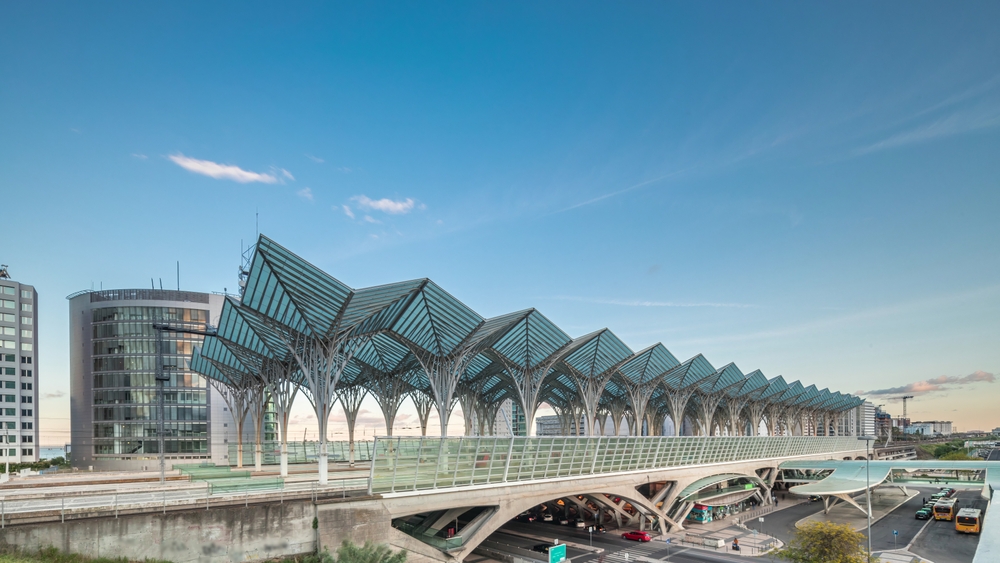
Portugal's rail infrastructure is growing, connecting Portugal to the rest of Europe
Recent resilience-focused investment plans have further accelerated spending on energy security, utilities modernisation and climate adaptation infrastructure, reinforcing confidence among institutional investors.
Crucially, Portugal’s appeal is no longer based solely on cost competitiveness – as with so many European nations, cheap labour jobs were lost to the Far East some time ago.
But Labour quality – Portugal has fostered a well-educated and higher skilled younger workforce – regulatory transparency, political moderation and quality of life have are now influential components of the investment equation.
International businesses increasingly view Portugal as a jurisdiction capable of balancing innovation with stability, a rarer mix in a volatile global market. So, the nation’s ability to maintain fiscal discipline while attracting talent, tourism and capital have built confidence across both public and private sectors.
Paul Stannard, chairman and founder of Portugal Pathways, said: “For global investors, the Portuguese story is now less about recovery and more about positioning. Tourism provides international visibility and recurring economic activity. Healthcare offers defensive, long-duration growth potential aligned with demographic trends. Infrastructure underpins national productivity and long-term resilience.
“This trio has written a powerful modern investment thesis. Portugal retains the charm and accessibility that first attracted international attention, but its economic identity is far more sophisticated: rather than benefiting from favourable conditions, the country is actively engineering them.”
Portugal Pathways has supported hundreds of Golden Visa residency-by-investment applications and provides expert guidance through its professional supply chain network on estate planning, wealth management, Golden Visa and tax optimisation, including post-NHR / IFICI tax regime planning, as well as private healthcare, money transfers and bespoke relocation and luxury real estate solutions to enhance life and investment in Portugal
Disclaimer: The information on the Portugal Pathways and Portugal Investment Owners Club (P Club for short) websites and in email communications is for general informational purposes only and should not be construed as legal, tax, or financial advice. You should consult and check with a qualified professional advisor before relying on any information provided on this website or in email communications. As it relates to investments in Golden Visas or other wealth management solutions offered by regulated and professional advisors, it is important to note that past performance is no guarantee of future returns. Private equities can be highly illiquid and come with risk and should always be under professional independent advice. Golden Visa investments need to be held for 6 to 7 years to allow for permanent citizenship/passport in the EU.
Disclaimer:The information on the Portugal Pathways and Portugal Investment Owners Club (PIO Club) websites, and in our email communications, is general information only. It is not legal, tax, immigration or financial advice, it is not a personal recommendation, and it is not an offer or invitation to buy, sell or subscribe to any investment. You should take advice from an appropriately qualified and regulated professional, based on your own circumstances, before acting on anything published here.
Portugal Pathways and PIO Club are information businesses. We are not authorised to provide regulated investment advice or to manage investments, and we do not do so. Where regulated services are required, we work alongside separately regulated third-party firms; those firms are responsible for the advice they give and the products they provide, and you contract with them directly. Our commercial relationships and any fees we receive are disclosed to you. We describe our model as integrated, transparent and conflict-managed.
Residency and citizenship are governed by Portuguese law and administered by AIMA and the competent authorities. Eligibility criteria, qualifying categories, processing times and statutory periods are set by law and change from time to time. No investment guarantees the grant of a residence permit, permanent residency or citizenship, and we make no representation as to how long any application will take. Naturalisation is a separate legal process with its own statutory requirements.Investments carry risk. Capital is at risk and you may get back less than you invest. Past performance is not a guide to future returns. Private market and fund investments can be highly illiquid, may not be readily realisable, and may not be suitable for all investors.






.avif)

.jpg)

.jpg)

.avif)
.avif)
.jpg)
.jpg)
.jpg)
.jpg)
.jpg)
.jpg)
.avif)
.avif)
.avif)
.jpg)

.jpeg)
.jpeg)