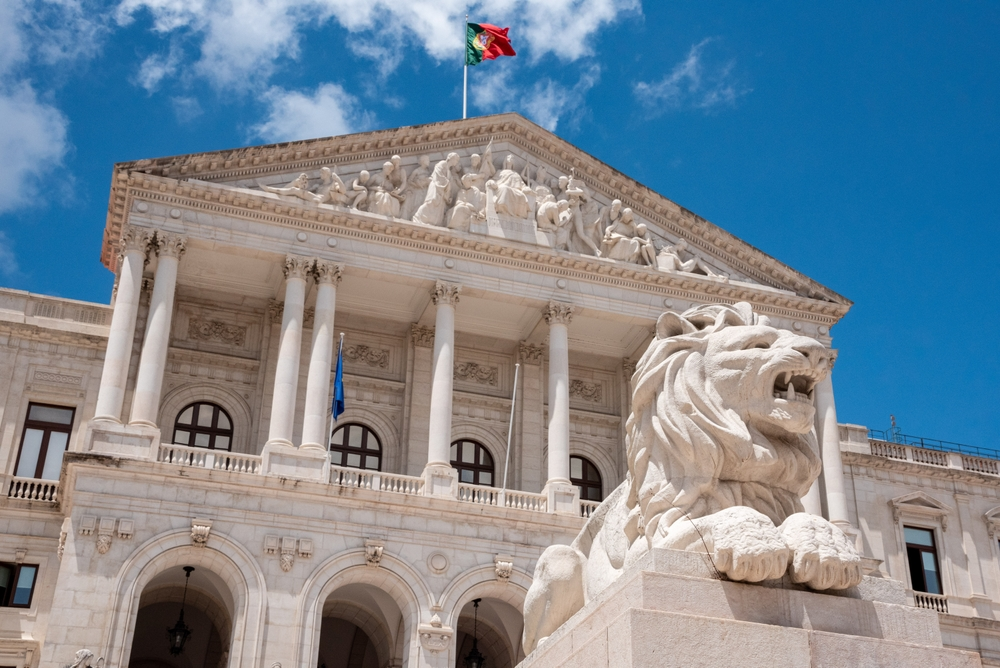
This visa allows foreign nationals to reside in Portugal, provided they have sufficient means to support themselves.
Portugal's D7 Visa is a residence permit route for non-EU, non-EEA, and non-Swiss nationals with stable, recurring income from outside Portugal. It is commonly called the passive income visa or the retirement visa, since it is built around income that continues without active work: pensions, rental income, dividends, and similar sources.
What Counts as Passive Income for the D7 Visa?
The D7 Visa is built around income that "works for" the applicant rather than income from active employment in Portugal. Qualifying sources typically include:
Retirement pensions: state or private
Rental income: from property held anywhere in the world, not only in Portugal
Dividends and investment income
Intellectual property royalties
Applicants who rely on active salaried employment or freelance work rather than these passive sources are more likely to fit the D8 Visa; the two routes are assessed differently.
Eligibility Criteria
Minimum income. As of February 2026, the minimum income threshold is €920 a month, or €11,040 a year, for a single applicant, based on Portugal's national minimum wage. This figure moves whenever the minimum wage does, which is worth building a margin around rather than applying right at the line.
Beyond income, applicants need private health insurance covering their stay, a clean criminal record certificate from their country of residence, and evidence of accommodation in Portugal, such as a rental contract or a property deed.
A savings buffer is typically expected too, alongside a Portuguese tax number (NIF) and a Portuguese bank account. Portugal Pathways works through the specific documentation and figures a given application needs.
Family Reunification
Immediate family members, including a spouse and dependent children, can be included on a D7 application. Additional income is required on top of the base threshold: broadly, 50% of the base threshold for a spouse or adult dependent, and 30% per dependent child, both reviewed on the same periodic basis as the main threshold.
Residence Permit Duration and Renewal
The D7 Visa process begins with a short-term national entry visa, generally valid for around four months, used to enter Portugal and apply for a residence permit. The residence permit that follows is initially valid for two years, then renews for successive three-year periods.
During each permit period, holders must not be absent from Portugal for more than six consecutive months, or eight months in total across a year. This is a genuine-residence requirement, not a low physical-presence structure, and distinguishes the D7 from Portugal's Golden Visa, which has a materially lower presence requirement.
Path to Permanent Residency and Citizenship
Permanent residency remains available after five years of legal residence. A revision to Portugal's Nationality Law, Lei Orgânica n.º 1/2026, was approved by Parliament on 1 April 2026, promulgated on 3 May 2026, and entered into force on 19 May 2026.
It extends the residency period required before citizenship eligibility to approximately 10 years for most applicants, or 7 years for EU and Portuguese-speaking/CPLP nationals, counted from issuance of the first residence permit.
It also introduces an A2-level Portuguese language requirement and a civic-knowledge assessment. Individuals who had already filed before the law's entry into force may fall under transitional arrangements, which a regulated legal adviser can map against a specific filing date.
How to Apply for a D7 Visa
The D7 visa application process involves the following steps:
Gather required documents: passport, proof of qualifying income, health insurance, a clean criminal record certificate, and proof of accommodation.
Submit the application to the Portuguese consulate or embassy in the applicant's country of residence.
Await approval, which typically takes several months. Approval is discretionary and subject to review by AIMA, Portugal's immigration authority.
Arrive in Portugal and apply for the residence permit.
Renew the permit as it comes up for renewal, maintaining the required physical presence.
FAQs
Can I combine several passive income sources to meet the D7 threshold?
Yes. A pension, rental income, and dividends can typically be combined to reach the required total; the D7 does not require the entire amount to come from a single source, only that the combined total is genuinely passive rather than active employment income.
What happens if my income is close to the minimum threshold?
The threshold is reviewed periodically and rises if Portugal's national minimum wage rises, so an application near the line at one point in the year can fall short by the time it's assessed. Portugal Pathways can confirm the applicable figure and build in a margin before submission.
Can I add a family member after my D7 application has already been approved?
Family members are typically included as part of the same application, since the income requirement is calculated to cover everyone included from the outset. Adding a dependant later is possible in principle, though it runs as its own process with its own paperwork rather than a simple addition to the existing file.
Is D7 residency the same as Portuguese citizenship?
No. A D7 residence permit leads to permanent residency after five years. Citizenship is a separate, longer step under Portugal's 2026 Nationality Law revision: around 10 years for most applicants, 7 years for EU/CPLP nationals, and dependent on individual circumstances beyond what a general guide can settle.
Why does the D7 process start with a visa and then require a separate permit application?
The initial national visa, valid for around four months, only allows entry to Portugal. The residence permit that establishes actual D7 status is applied for after arrival, and is what's renewed every two or three years thereafter.
Disclaimer:The information on the Portugal Pathways and Portugal Investment Owners Club (PIO Club) websites, and in our email communications, is general information only. It is not legal, tax, immigration or financial advice, it is not a personal recommendation, and it is not an offer or invitation to buy, sell or subscribe to any investment. You should take advice from an appropriately qualified and regulated professional, based on your own circumstances, before acting on anything published here.
Portugal Pathways and PIO Club are information businesses. We are not authorised to provide regulated investment advice or to manage investments, and we do not do so. Where regulated services are required, we work alongside separately regulated third-party firms; those firms are responsible for the advice they give and the products they provide, and you contract with them directly. Our commercial relationships and any fees we receive are disclosed to you. We describe our model as integrated, transparent and conflict-managed.
Residency and citizenship are governed by Portuguese law and administered by AIMA and the competent authorities. Eligibility criteria, qualifying categories, processing times and statutory periods are set by law and change from time to time. No investment guarantees the grant of a residence permit, permanent residency or citizenship, and we make no representation as to how long any application will take. Naturalisation is a separate legal process with its own statutory requirements.Investments carry risk. Capital is at risk and you may get back less than you invest. Past performance is not a guide to future returns. Private market and fund investments can be highly illiquid, may not be readily realisable, and may not be suitable for all investors.








.avif)

.jpg)

.jpg)

.avif)
.avif)
.jpg)
.jpg)
.jpg)
.jpg)
.jpg)
.jpg)
.avif)
.avif)
.avif)
.jpg)
.jpeg)



.jpeg)