What Portugal's Golden Visa really means for your family
written by
Oakie Britcher
Editorial Manager
For internationally mobile families exploring residency options in Europe, Portugal's Golden Visa remains a frequent starting point for research and conversation.
Now well over ten years old, it is among the longer-running residency-by-investment programmes on the continent — though, like any major family decision, whether it's the right fit depends entirely on individual circumstances rather than on the programme's popularity.
The Golden Visa in plain terms
At its core, the Portuguese Golden Visa is a residency-by-investment route open to eligible non-EU, non-EEA and non-Swiss nationals who complete a qualifying investment under Portuguese law. The mechanism is the investment; the appeal for most applicants lies elsewhere — in the residency rights, the option of including family members, and the flexibility the permit can offer over time.
Current qualifying routes include a subscription of at least €500,000 into a regulated investment fund, a capital investment of at least €500,000 made either by creating a new Portuguese company that generates a minimum number of jobs or by investing in an existing Portuguese business, and a donation of €250,000 or more supporting cultural, artistic or heritage projects, with a reduced threshold available in some designated low-density areas.
These categories, thresholds and job-creation requirements are set by current legislation and are subject to change, so it's worth confirming the latest position with a qualified adviser before moving forward.
One point that continues to cause confusion: residential property has not qualified as an investment route in Portugal since 2023. This differs from some other countries' investment-residency programmes so it's important not to assume Portugal's works the same way.
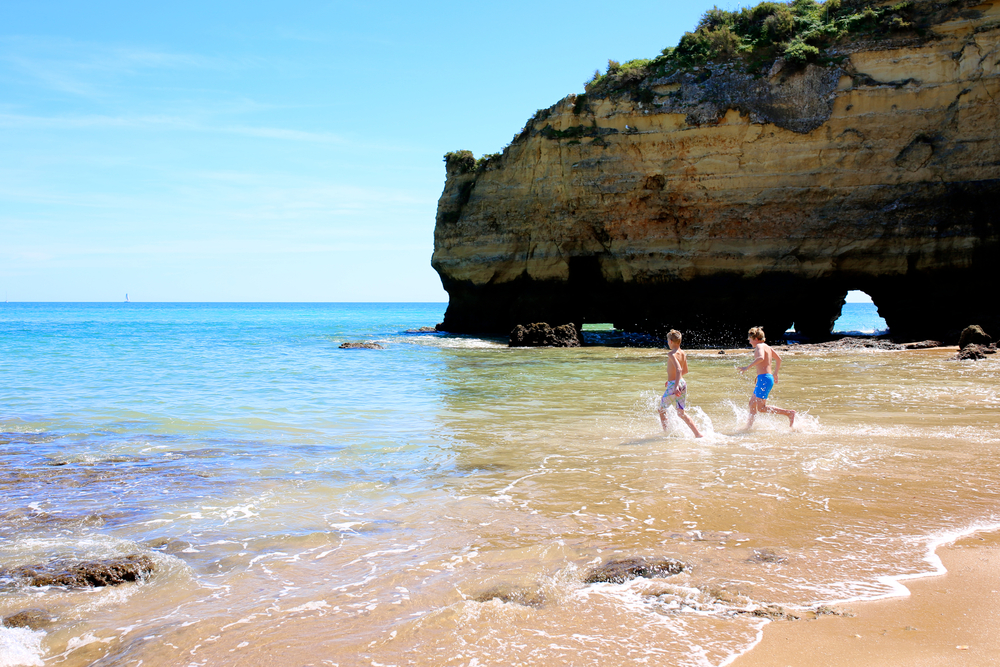
Portugal's Golden Visa is one of the most popular options for families considering European residency options
Including family members isn't automatic — but it is possible
A single qualifying investment can, in principle, extend to a wider family group. That said, no one is included automatically; each family member's inclusion is assessed on its own merits against Portugal's family reunification rules and requires supporting documentation and approval from the Portuguese immigration authority, AIMA.
Those who can typically be considered include the main applicant's spouse or legal partner, unmarried dependent children (including adult children in full-time education, generally up to around age 26), and dependent parents or grandparents of the applicant or their spouse, with those aged 65 and over generally presumed dependent.
You don't need to move to Portugal
A common misconception is that the Golden Visa requires relocating full-time. It doesn't. Under current rules, holders are generally expected to spend an average of around seven days a year in the country to maintain the permit. The permit also provides visa-free travel across the Schengen Area for short stays — typically up to 90 days within any 180-day period — under the rules currently in force.
Three things worth knowing
Residency isn't tax residency. Holding a Portuguese residency permit through the Golden Visa doesn't automatically make someone a Portuguese tax resident. That status is determined separately, under Portuguese tax law and an individual's own circumstances.
Golden Visa holders don't automatically become tax residents in Portugal
Residency isn't citizenship. These are distinct legal stages, and the path from one to the other has changed. Portugal's Nationality Law was revised in 2026, extending the qualifying residency period required before naturalisation, with the exact timeline now varying by nationality.
Anyone weighing up the citizenship question should look at current legislation for their specific situation rather than relying on older timelines.
No outcome is guaranteed. Applications are reviewed by the Portuguese authorities, and approval, processing times and any future investment performance all depend on factors outside any adviser's control.
Is it the right fit?
That depends on the family. Nationality, financial profile, long-term mobility goals and how a family's wider wealth and succession planning is structured all shape whether the Golden Visa makes sense — and the calculation looks different for a retiree than for an entrepreneur still growing a business elsewhere. It's a decision worth taking time over rather than rushing.
Families considering the route often benefit from speaking to specialists who can walk through the current rules as they apply to their own situation.
Portugal Pathways has supported hundreds of Golden Visa residency-by-investment applications and provides expert guidance through its professional supply chain network on estate planning, wealth management, Golden Visa and tax optimisation, including post-NHR / IFICI tax regime planning, as well as private healthcare, money transfers and bespoke relocation and luxury real estate solutions to enhance life and investment in Portugal
Disclaimer: The information on the Portugal Pathways and Portugal Investment Owners Club (PIO Club for short) websites and in email communications is for general informational purposes only and should not be construed as legal, tax, or financial advice. You should consult and check with a qualified professional advisor before relying on any information provided on this website or in email communications. As it relates to investments in Golden Visas or other wealth management solutions offered by regulated and professional advisors, it is important to note that past performance is no guarantee of future returns. Private equities can be highly illiquid and come with risk and should always be under professional independent advice. Golden Visa investments need to be held for 6 to 7 years to allow for permanent citizenship/passport in the EU.
Disclaimer:The information on the Portugal Pathways and Portugal Investment Owners Club (PIO Club) websites, and in our email communications, is general information only. It is not legal, tax, immigration or financial advice, it is not a personal recommendation, and it is not an offer or invitation to buy, sell or subscribe to any investment. You should take advice from an appropriately qualified and regulated professional, based on your own circumstances, before acting on anything published here.
Portugal Pathways and PIO Club are information businesses. We are not authorised to provide regulated investment advice or to manage investments, and we do not do so. Where regulated services are required, we work alongside separately regulated third-party firms; those firms are responsible for the advice they give and the products they provide, and you contract with them directly. Our commercial relationships and any fees we receive are disclosed to you. We describe our model as integrated, transparent and conflict-managed.
Residency and citizenship are governed by Portuguese law and administered by AIMA and the competent authorities. Eligibility criteria, qualifying categories, processing times and statutory periods are set by law and change from time to time. No investment guarantees the grant of a residence permit, permanent residency or citizenship, and we make no representation as to how long any application will take. Naturalisation is a separate legal process with its own statutory requirements.Investments carry risk. Capital is at risk and you may get back less than you invest. Past performance is not a guide to future returns. Private market and fund investments can be highly illiquid, may not be readily realisable, and may not be suitable for all investors.









.avif)

.jpg)

.jpg)

.avif)
.avif)
.jpg)
.jpg)
.jpg)
.jpg)
.jpg)
.jpg)
.avif)
.avif)
.avif)
.jpg)


.jpeg)
.jpeg)