Portugal’s economic transformation poised to deliver long-term rewards
written by
Joe Tapp
Client Relations Manager
For many years, Portugal was viewed as something of a European outlier — celebrated for its lifestyle, climate and heritage, but seldom regarded as a key participant in the global economic landscape.
However, geopolitical instability has reshaped international supply chains. Remote working has altered the movement of talent worldwide. At the same time, international investors are placing increasing value on stable, globally connected jurisdictions.
As a result, Portugal is emerging as one of Europe’s most strategically positioned countries for investment, innovation, logistics and long-term wealth planning.
Explains Rogério Fernandes Ferreira, CEO of Lisbon-based RFF Lawyers and former Secretary of State of Fiscal Affairs in Portugal: “Portugal is no longer a peripheral country.
“When analysed through the lens of infrastructure, global trade routes, legal frameworks, and geopolitical alignment, Portugal becomes one of Europe’s most important Atlantic gateways connecting Europe, the Americas, Africa, and the Portuguese-speaking world.”
Lisbon benefits from direct operational overlap with both the United States and Europe — sharing the same time zone as London while also aligning working hours with cities such as New York and Chicago.
This dual-access advantage is becoming increasingly appealing to multinational corporations, technology firms, financial services businesses and international entrepreneurs seeking a European base with transatlantic connectivity.
Portugal’s geographical strengths are now being reinforced by increasingly competitive tax frameworks, international investment initiatives and large-scale infrastructure development.
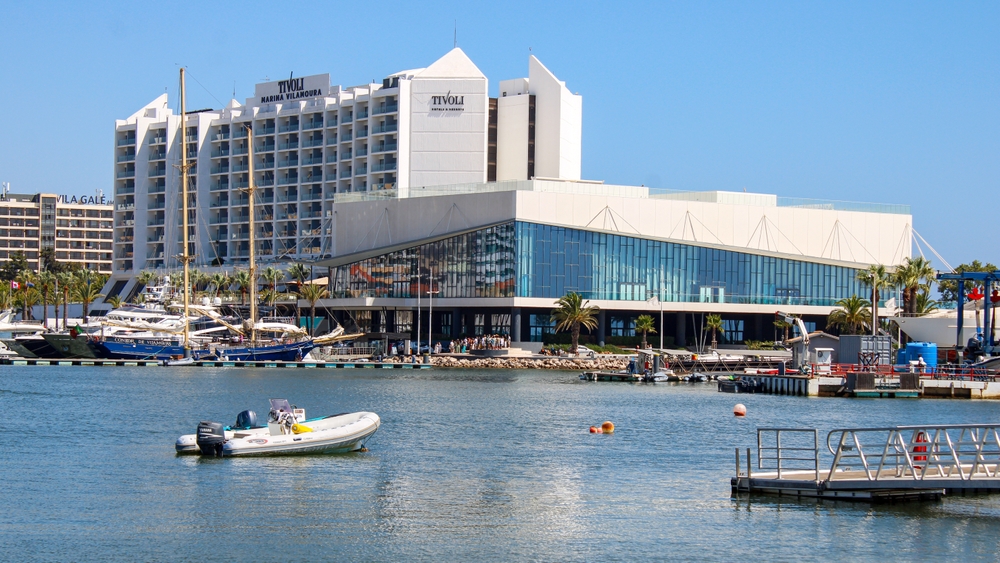
Portugal's location is ideal for those operating across Europe and North America
Since its launch in 2012, the scheme has generated an estimated €54 billion in economic impact and supported approximately 30,000 jobs.
Today, around 95% of Golden Visa applicants opt for the regulated investment fund route, allowing them to pursue residency through a €500,000 investment in qualifying Portuguese alternative investment funds.
Importantly, the programme requires an average physical presence of only seven days per year.
Paul Stannard, Chairman and Founder of Portugal Pathways and Portugal Investment Owners Club, says the programme continues to play a strategically important role in Portugal’s international profile, while recognising the operational frustrations currently being experienced by many investors.
He explains: “The Golden Visa has played an important role in attracting international capital, entrepreneurs, and globally mobile families into Portugal.
“However, it is also important to recognise that many applicants, between 2020 and 2024, have experienced significant frustration around delays within the immigration system, particularly relating to processing and biometric appointments.
“These delays have understandably created concern over legitimate expectations around residency timelines, permanent citizenship eligibility, and the recent extension of the nationality timeline to 10 years under changes to Portuguese nationality law.”
He adds that despite these difficulties, Portugal’s broader strategic and economic transition is increasingly reflected in international economic sentiment.
Portugal's Golden Visa has contributed an estimated €54 billion to the economy
Recently named ‘Economy of the Year’ by UK-based The Economist magazine, Portugal continues to receive strong endorsements from major credit ratings agencies.
Fitch Ratings continues to place Portugal within the A category across key sovereign credit indicators, reinforcing confidence in the country’s fiscal management, political stability and long-term economic prospects.
Adds Stannard: “For many international families, Portugal’s attraction extends far beyond residency itself.
“It is about long-term stability, access to Europe, safety, education, healthcare, lifestyle, climate and increasingly the country’s economic growth story and international connectivity.”
IFICI provides qualifying professionals, entrepreneurs, researchers, consultants and other recognised value creators with the opportunity to benefit from a flat 20% tax rate on qualifying Portuguese employment and self-employment income for up to 10 years.
Additionally, many categories of non-Portuguese-sourced passive income — including certain foreign dividends, royalties and other overseas income streams — may remain exempt from Portuguese taxation for qualifying individuals, depending on personal circumstances and applicable double taxation agreements.
Portugal has also introduced favourable tax measures aimed at younger workers, including reduced income tax rates for many individuals under the age of 35, as part of a broader strategy to retain and attract talent within an increasingly competitive global economy.
Portugal was named 'Economy of the Year' by The Economist magazine
Adds Paul Stannard: “Today’s internationally mobile entrepreneurs and families are typically making far more holistic decisions.
“They are looking at operational flexibility, legal certainty, international access, quality of life, safety, education, healthcare, and long-term family planning. Portugal increasingly offers a compelling balance across all of those areas.”
Portugal’s future economic positioning is also being reinforced by major infrastructure developments.
The Port of Sines is rapidly evolving into one of Europe’s most strategically important deep-water ports, positioned directly on Atlantic shipping routes linking Europe, the Americas and Africa.
At the same time, Portugal has become a key landing point for major global submarine fibre optic cables, including EllaLink and 2Africa, helping establish the country as an emerging digital infrastructure hub.
This enhanced connectivity has already attracted interest from major international technology operators and hyperscale data centre projects.
Paul Sheedy, special adviser to the Portugal Future Fund, believes these developments are creating long-term structural opportunities across a range of sectors.
As one of the approved Golden Visa investment funds, the Portugal Future Fund invests in sectors helping drive Portugal’s next stage of economic expansion.
He explains: “Portugal is entering a period where several major growth sectors are converging simultaneously.
“Technology, media, healthcare, renewable energy, luxury hospitality, digital infrastructure, and international services are all benefiting from Portugal’s combination of political stability, international accessibility, talent, safety, and improving infrastructure.”
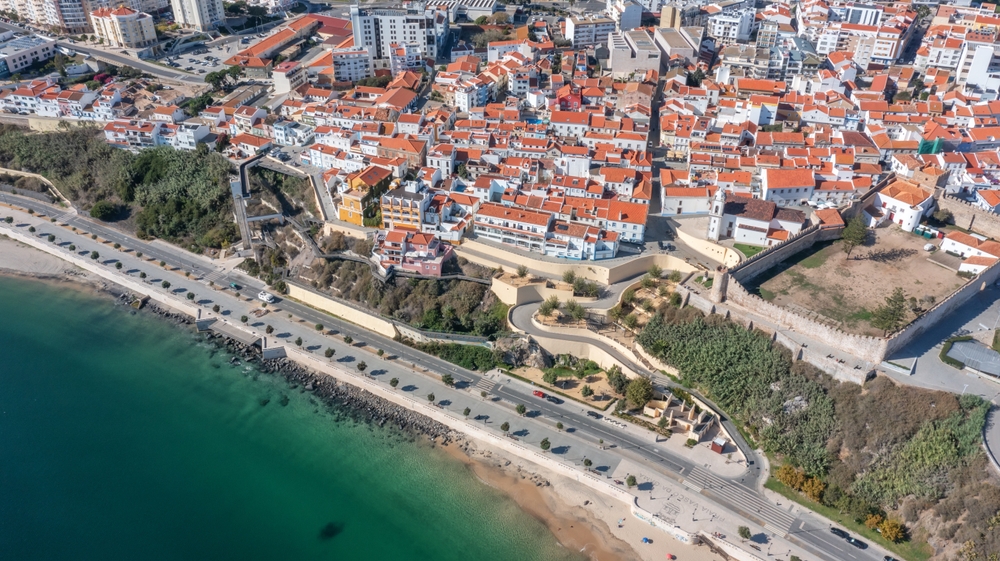
Sines is becoming one of Europe's most significant trade ports
He believes Portugal’s position increasingly aligns with wider shifts taking place across global capital and talent flows.
“International investors and businesses are increasingly prioritising jurisdictions that combine resilience, connectivity, lifestyle, safety, and long-term strategic relevance.
“Portugal sits in a very strong position because it can offer those attributes while still having significant room for future growth compared to more mature Northern European markets.”
The country is already making significant investments in offshore wind, solar power, green hydrogen and renewable infrastructure connected to the wider European decarbonisation agenda.
Projects such as the H2Med hydrogen corridor linking Portugal, Spain and France could help establish Portugal as one of Europe’s future renewable energy exporters.
Nevertheless, challenges remain.
Productivity, export capacity and research and development investment are still areas where substantial progress is required.
Even so, many analysts now believe the foundations are finally in place for Portugal to enter a new phase of economic development.
Or, as Rogério Fernandes Ferreira concludes: “Portugal already possesses the geography, institutional alignment, infrastructure, and timing.
“What remains is the strategic vision and international communication necessary to transform those advantages into sustained national growth.”
About Portugal Pathways
Portugal Pathways has supported hundreds of Golden Visa residency-by-investment applications and provides expert guidance through its professional supply chain network on estate planning, wealth management, Golden Visa and tax optimisation, including post-NHR / IFICI tax regime planning, as well as private healthcare, money transfers and bespoke relocation and luxury real estate solutions to enhance life and investment in Portugal
Disclaimer: The information on the Portugal Pathways and Portugal Investment Owners Club (PIO Club for short) websites and in email communications is for general informational purposes only and should not be construed as legal, tax, or financial advice. You should consult and check with a qualified professional advisor before relying on any information provided on this website or in email communications. As it relates to investments in Golden Visas or other wealth management solutions offered by regulated and professional advisors, it is important to note that past performance is no guarantee of future returns. Private equities can be highly illiquid and come with risk and should always be under professional independent advice. Golden Visa investments need to be held for 6 to 7 years to allow for permanent citizenship/passport in the EU.
Disclaimer:The information on the Portugal Pathways and Portugal Investment Owners Club (PIO Club) websites, and in our email communications, is general information only. It is not legal, tax, immigration or financial advice, it is not a personal recommendation, and it is not an offer or invitation to buy, sell or subscribe to any investment. You should take advice from an appropriately qualified and regulated professional, based on your own circumstances, before acting on anything published here.
Portugal Pathways and PIO Club are information businesses. We are not authorised to provide regulated investment advice or to manage investments, and we do not do so. Where regulated services are required, we work alongside separately regulated third-party firms; those firms are responsible for the advice they give and the products they provide, and you contract with them directly. Our commercial relationships and any fees we receive are disclosed to you. We describe our model as integrated, transparent and conflict-managed.
Residency and citizenship are governed by Portuguese law and administered by AIMA and the competent authorities. Eligibility criteria, qualifying categories, processing times and statutory periods are set by law and change from time to time. No investment guarantees the grant of a residence permit, permanent residency or citizenship, and we make no representation as to how long any application will take. Naturalisation is a separate legal process with its own statutory requirements.Investments carry risk. Capital is at risk and you may get back less than you invest. Past performance is not a guide to future returns. Private market and fund investments can be highly illiquid, may not be readily realisable, and may not be suitable for all investors.









.avif)

.jpg)

.jpg)

.avif)
.avif)
.jpg)
.jpg)
.jpg)
.jpg)
.jpg)
.jpg)
.avif)
.avif)
.avif)
.jpg)



.jpeg)